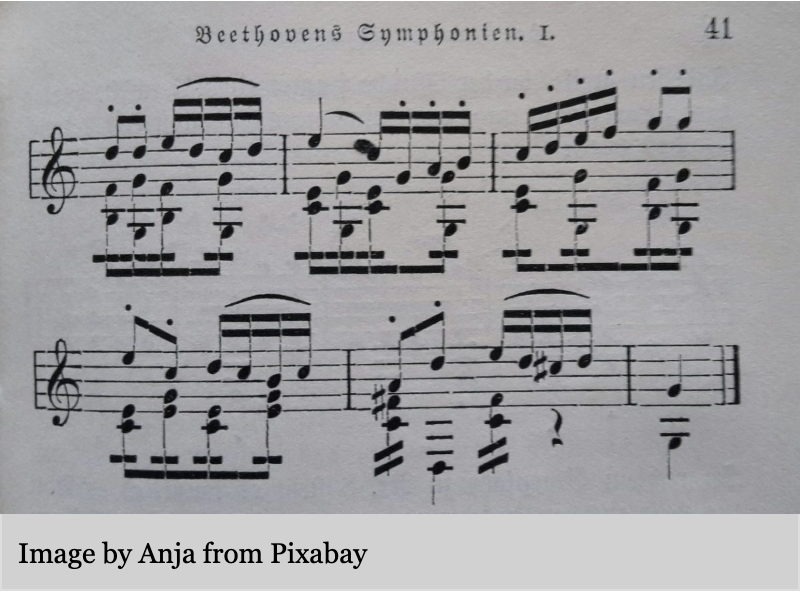
A whimsical but substantive report on why classical music is played in the boys’ bathrooms has won the top prize at the 2024 Jewish Scholastic Journalism Awards, the first time a feature story has won the overall award and the first time the award has gone to YULA High School.
Announced on JSPA’s website and social media March 26, the Grand Prize in Jewish Scholastic Journalism was awarded to “Lavatory Legato, A music review in the YULA Boys’ restrooms,” by sophomore Raphael Shreir, in the school’s newspaper, The Panther Post.
Raphael will receive a Grand Prize plaque and a recommendation from the American Jewish Press Association for a summer internship at a professional Jewish news source.
His story considers everything from technical differences between Bach and Chopin to the pedagogical rationale behind playing them in the bathrooms, which is not an accident and also is apparently not new.
“‘At YULA we view everything as a learning opportunity, including kavod habrius,‘ referring to the concept in the Gemara of maintaining dignity in your environment,” the story says, quoting YULA Head of School Rabbi Arye Sufrin.
Shreir also interviewed the school’s tech director, along with several students who are serious students of piano.
The same story also won First Place for Feature Stories. Contest judges choose the Grand Prize from among first-place winners.
“Some of the best feature stories are hiding in plain view,” the judges wrote. “This lively, fun piece on music in the school men’s room is one of those — surprising in its subject while also extremely well-written and composed.”
The Grand Prize winner was one of 182 submissions to this year’s contest, which drew entries from Jewish day schools; public schools, secular private schools, and religious schools across the United States. Work published by high school students during calendar year 2025 was eligible.
Judging was led by Susan Freudenheim, former managing editor of the Jewish Journal of Greater Los Angeles and JSPA’s vice president. Ms. Freudenheim worked for 13 years at the Los Angeles Times as arts editor and staff writer, and most recently served as Executive Director of Jewish World Watch.
Ms. Freudenheim said this year’s entries were more focused on local coverage than in recent years — returning to an earlier trend — but that as always, improvement was a theme.
“There were still really excellent pieces about Israel and the post-Oct. 7 crisis, but there also were a broader amount of stories about their own lives and school life than in the past couple of years as we’ve been going through this,” Ms. Freudenheim said.
“As is true every year there was an emergence of excellent work from newspapers that were improving year upon year,” she said. “I believe JSPA provides guidance and mentorship that really helps these students, and gets passed on from grade to grade and year to year.”‘
Leading all schools with five awards was Hamodiya of the Melvin J. Berman Academy of Rockville, Md.; followed by The Lion’s Tale of Charles E. Smith Jewish Day School, also of Rockville, with four; and the The Paw Print and FNN (Frisch News Network) of Yeshivat Frisch (also known as The Frisch School) of Paramus, N.J., whose print and broadcast editions combined to win three.
Also winning awards, in addition to YULA’s Panther Post, were The Boiling Point of Shalhevet High School in Los Angeles; What’s What of Hunter College High School in New York City; The Roar of Milken Community School in Los Angeles; The Mane Idea of Northwest Yeshiva High School in Seattle; Palette of Atlanta Jewish Academy; and The Packer Prism of Packer Collegiate Institute of Brooklyn Heights, N.Y.
This year the contest offered a new category for Social Media News and Feature coverage. It received only one entry, from The Roar Post of Scheck Hillel Academy in North Miami Beach, Fla. Ms. Freudenheim said for that reason, judges decided not to give an award.
There were six judges in all. Ms. Freudenheim was joined by Gary Rosenblatt, JSPA board member and editor and publisher of The New York Jewish Week from 1993 until 2020; Ryan Smith, longtime reporter and editor at newspapers including The Jewish Journal of Greater Los Angeles and now a writer in the Office of Communications at Kenyon College; Orli Lowe, former assistant book editor of the Los Angeles Times; and Leila Miller, Foreign Correspondent for Reuters based in Buenos Aires, Argentina; Emma Goss, staff writer at J: the Jewish News of Northern California, and a freelance reporter for NBC Bay Area; and Carlin Stiehl, Los Angeles-based photojournalist whose work appears regularly in the Los Angeles Times.
In addition, teen fellows writing for the New York Jewish Week and Jewish Telegraphic Agency (JTA) received six awards over two special categories, for news (or feature) and opinion stories that ran in professional publications. Because they are professionally edited, the professional news outlet categories do not compete for the Grand Prize.
Here are all the winners, with judges’ comments.
Category 1: News reporting on Jewish communities, religion, education, institutions, activism, culture, challenges, leaders or personalities.
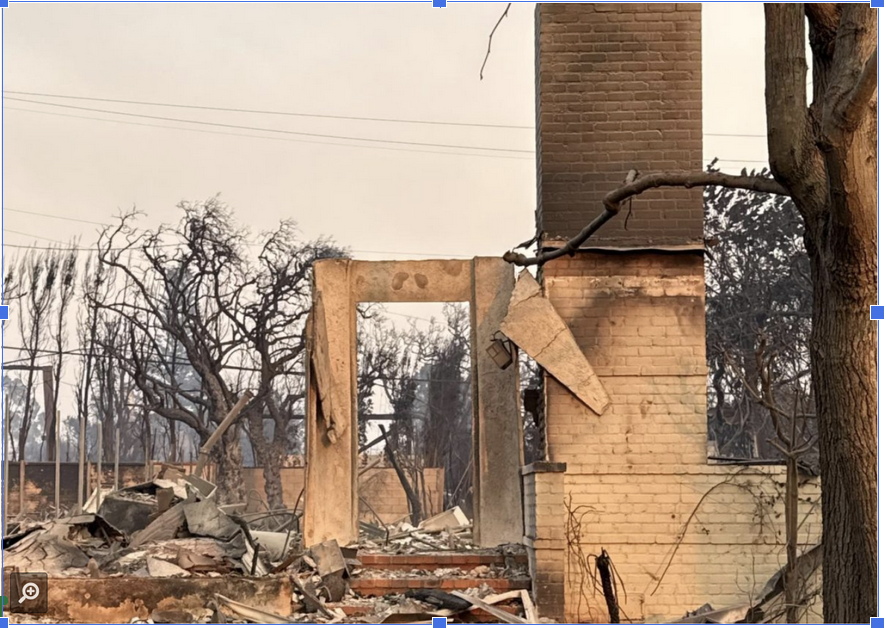
FIRST PRIZE: The Boiling Point, Shalhevet High School, Shalhevet student left with clothes, backpack as home destroyed in Palisades fire
By Sophie Katz
JUDGE’S COMMENT: An excellent account of a family’s story of loss in the Palisades fire, conveying their grief while vividly capturing their losses. The reporting on how evacuations, smoke, and proximity to the fires affected the broader school community shows real range.
SECOND PRIZE: What’s What, Hunter College High School, Antisemitic Graffiti Marks Shifting Administration Response to Hate Speech
By Natalie Viderman and Zadie Schonfeld
JUDGE’S COMMENT: A range of voices, context and details describe the school’s past handling of antisemitic incidents, as well as how a recent instance of a swastika on a school desk marked a shift in how the school addresses antisemitism.
THIRD PRIZE: The Boiling Point, Shalhevet High School, Anti-Israel demonstrations weigh on seniors’ college choices
By Ayala Katz
JUDGE’S COMMENT: A skillful portrait of how different seniors are navigating the same difficult reality — allowing each voice to speak for itself without forcing a single conclusion.
Category 2: Feature reporting on Jewish communities, religion, education, institutions, activism, culture, challenges, leaders or personalities.
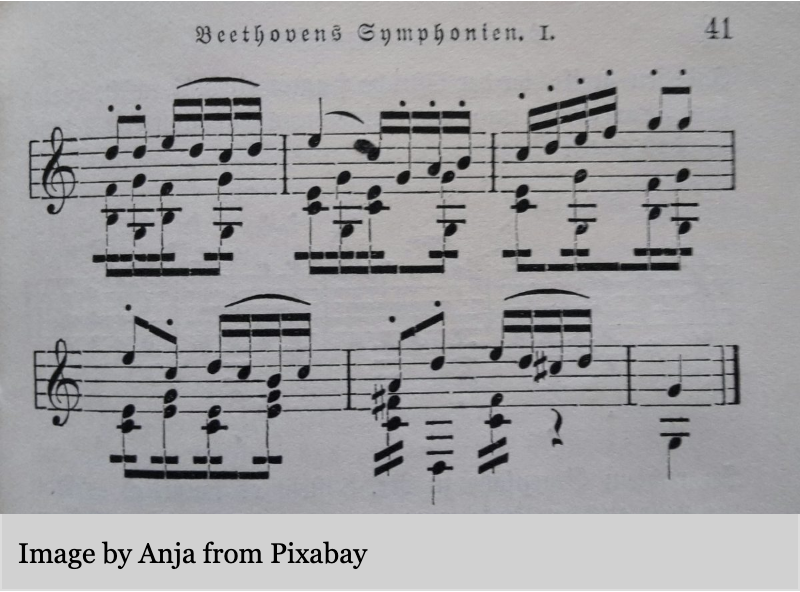
FIRST PRIZE: The Panther Post, YULA High School, Lavatory Legato: A Music Review in the YULA Boys’ Restrooms
By Raphael Shrier
JUDGE’S COMMENT: A fun, well-reported piece that reveals and explores a unique experience at a boys’ high school.
SECOND PRIZE: The Panther Post: YULA High School, College, gap year, and the Israel Defense Forces
By Mira Schulman
JUDGE’S COMMENT: A well-reported look at how the post-Oct. 7 conflict in Israel, and the subsequent protests on college campuses, have impacted choices by graduating high school seniors.
THIRD PRIZE: Hamodiya. Melvin J. Berman Hebrew Academy, What We’d Lose: The Impact of a TikTok Ban on High School Students
By Ozzie Hollander
JUDGE’S COMMENT: Through a survey and multiple interviews, this piece explores how the popular app is used by students, and its importance in their lives.
Category 3: News and feature reporting on current events involving Israel.
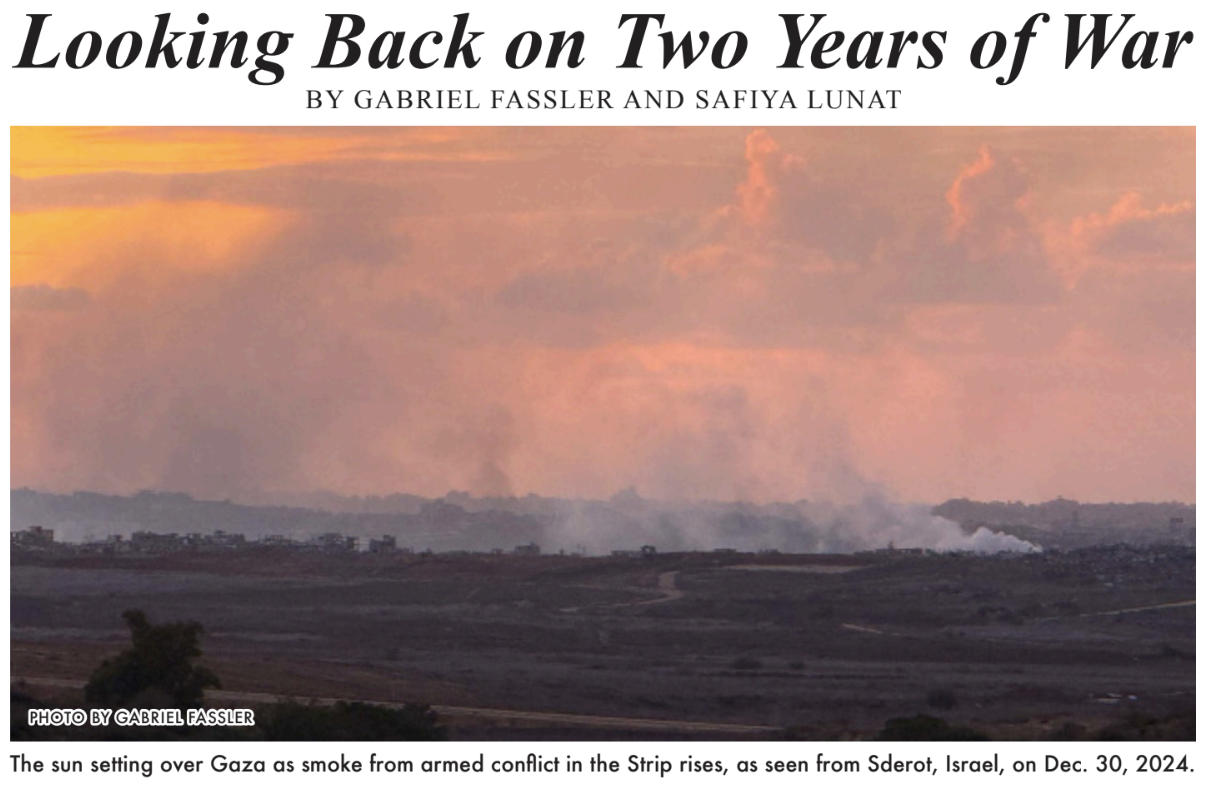
FIRST PRIZE: The Prism, Packer Collegiate Institute, Looking back on two years of war
By Gabriel Fassler and Safiya Lunat
JUDGE’S COMMENT: Taking advantage of a student body whose members include both Arabs and Jews with relatives in Gaza and Israel, the writers offer an insightful report that allows several students not only to make their case, but also to express how the Mideast war has changed them personally.
SECOND PRIZE: The Milken Roar, Milken Community Schools, Israel faces media backlash, Milken students confront antisemitism and the future of Hasbarah
JUDGE’S COMMENT: A crisp, clear and balanced view of the controversy over Israel’s poor media image, citing fellow students, a faculty member and an Israeli media expert on the unique challenges Israel faces in making its case.
Category 4: News or feature reporting on interreligious or intercultural activism or events.
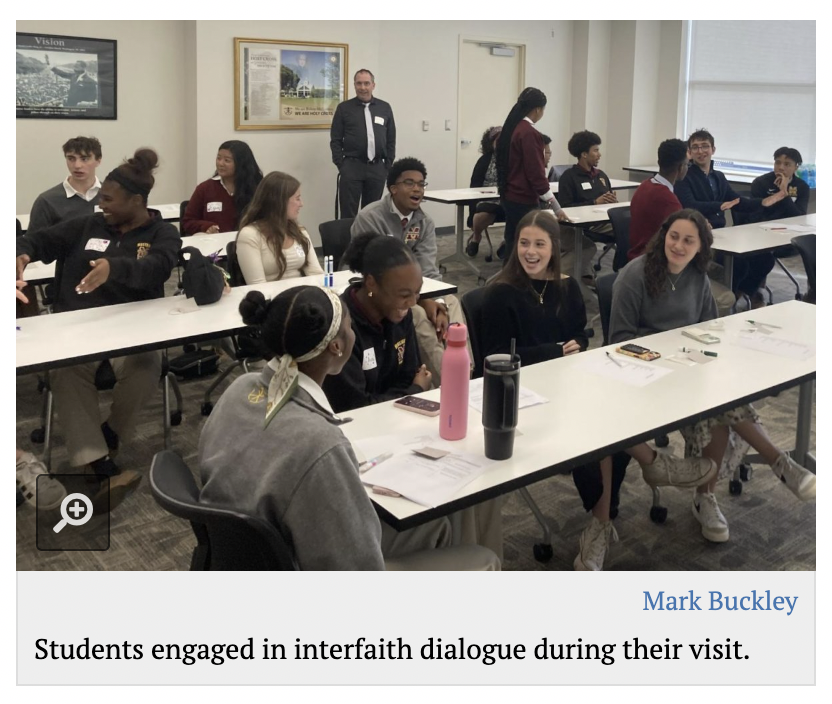
FIRST PRIZE: The Lion’s Tale, Charles E. Smith Jewish Day School, Bridging Beliefs
By Lindsay Shapiro
JUDGE’S COMMENT: A succinct, well reported story about an interfaith partnership.
Category 5: Ongoing reporting on any subject in Category 1, 2, 3 or 4. Ongoing reporting means at least two stories on two different days, covering a story that is evolving with additional facts or occurrences.

FIRST PRIZE: Hamodiya. Melvin J. Berman Hebrew Academy, New Veirs Mill Bus Route May Change Your Commute
By Noam Kovacs
JUDGE’S COMMENT: A very detailed and thorough story that serves as a public service for certain commuters!
Category 6: Opinion: Non-first person opinion on any Jewish or Israel-related story.
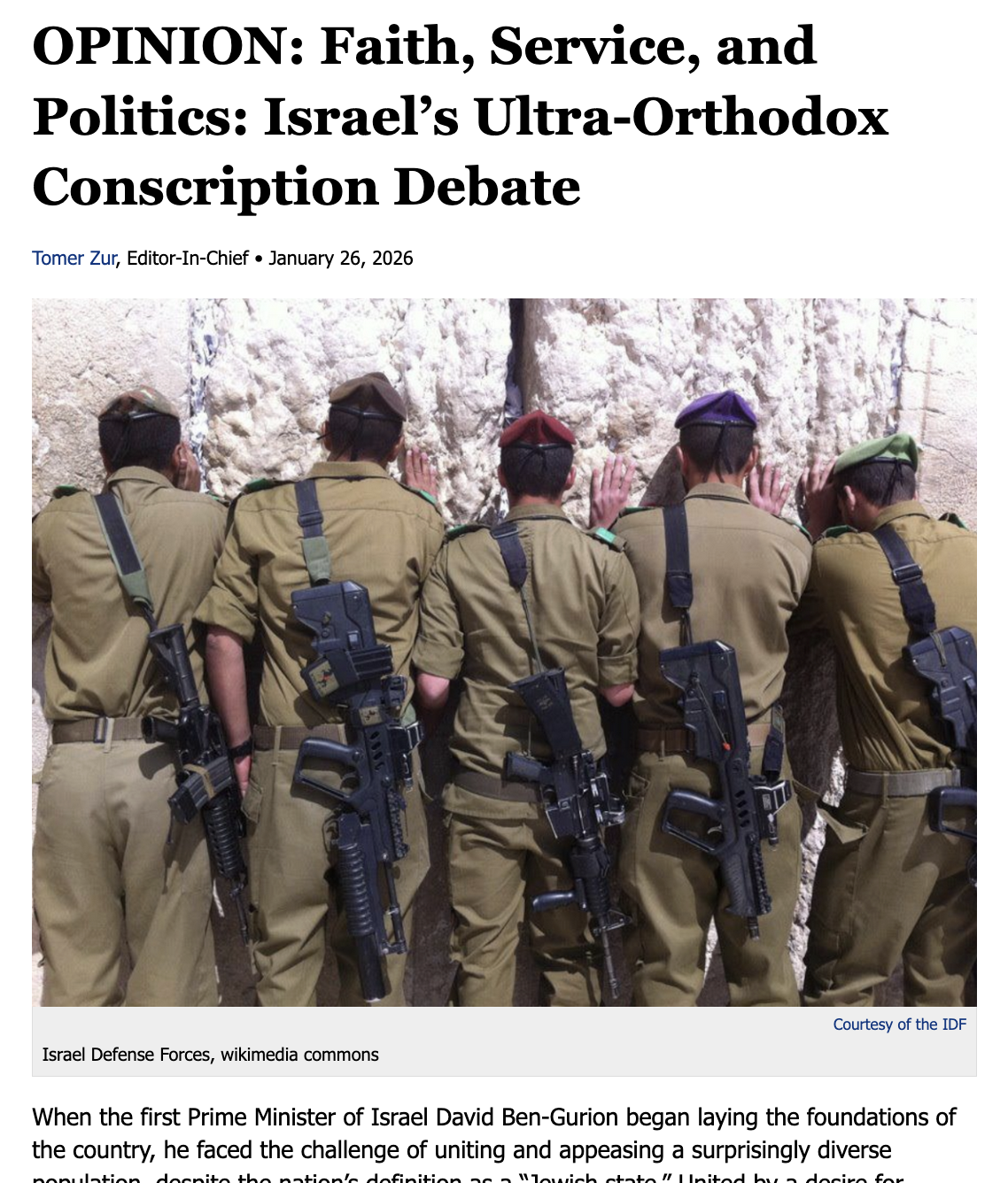
FIRST PLACE (tie): The Milken Roar, Milken Community Schools, Faith, Service and Politics: Israel’s Ultra-Orthodox Conscription Debate
By Tomer Zur
JUDGE’S COMMENT: A fact-filled, clean exploration of the debate surrounding compulsory military service for Ultra Orthodox Jews in Israel in a post-Oct. 7 world.
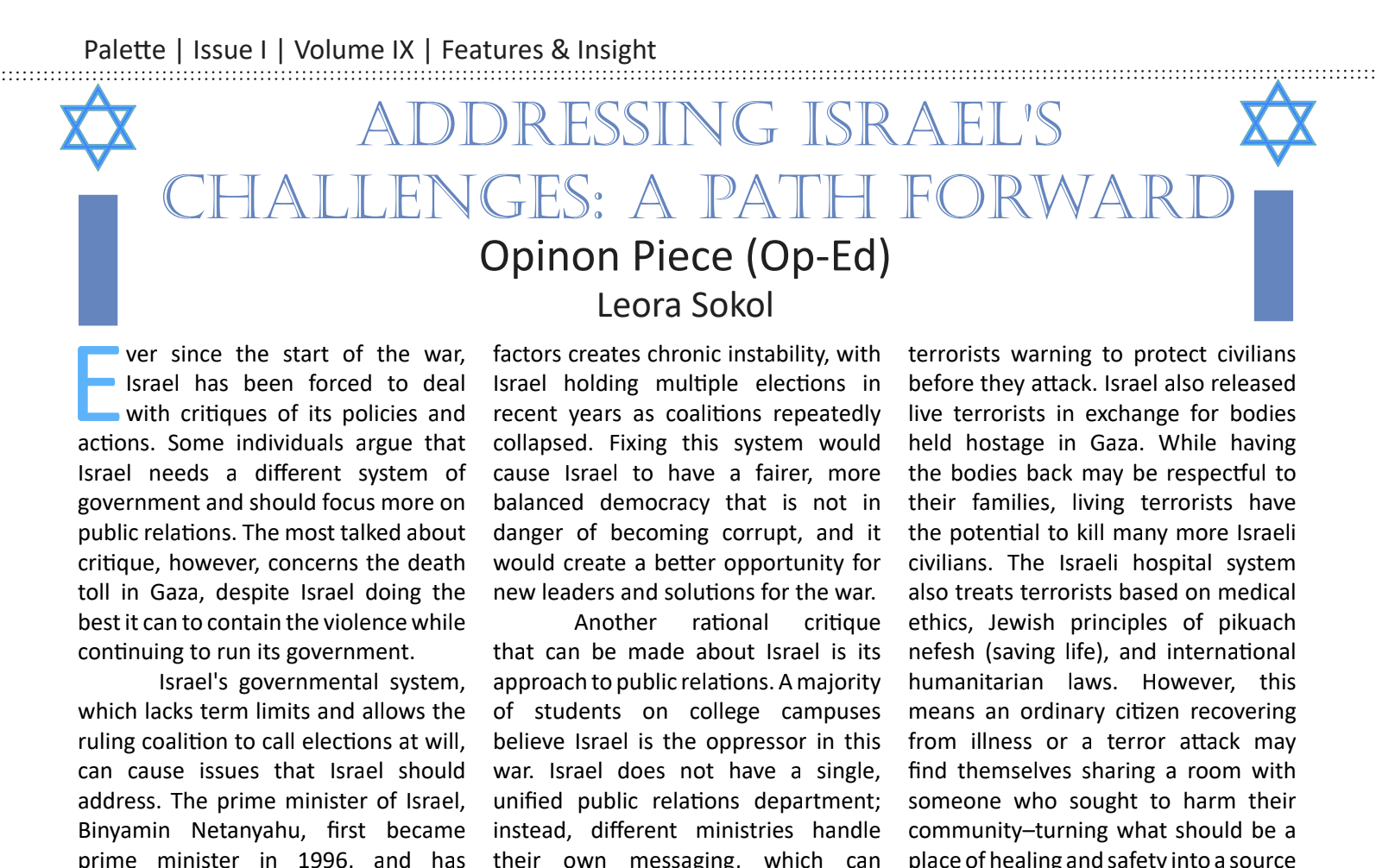
FIRST PRIZE (tie): Palette, Atlanta Jewish Academy: Addressing Israel’s Challenges
By Leora Sokol
JUDGE’S COMMENT: A strong argument of how reforms must be made in the Israeli system of government so that any one parity cannot hold on to power for an extended number of years.
THIRD PRIZE: The : Mane Idea, Northwest Yeshiva High School, The Halacha of ‘Severance’
By Daniel Galili
JUDGE’S COMMENT: A delightful take on the Apple TV streaming show “Severance” using traditional Jewish textual reference to show how its alternate moral universe does not play well with Jewish law.
CATEGORY 7: First-person Experience or Opinion Writing
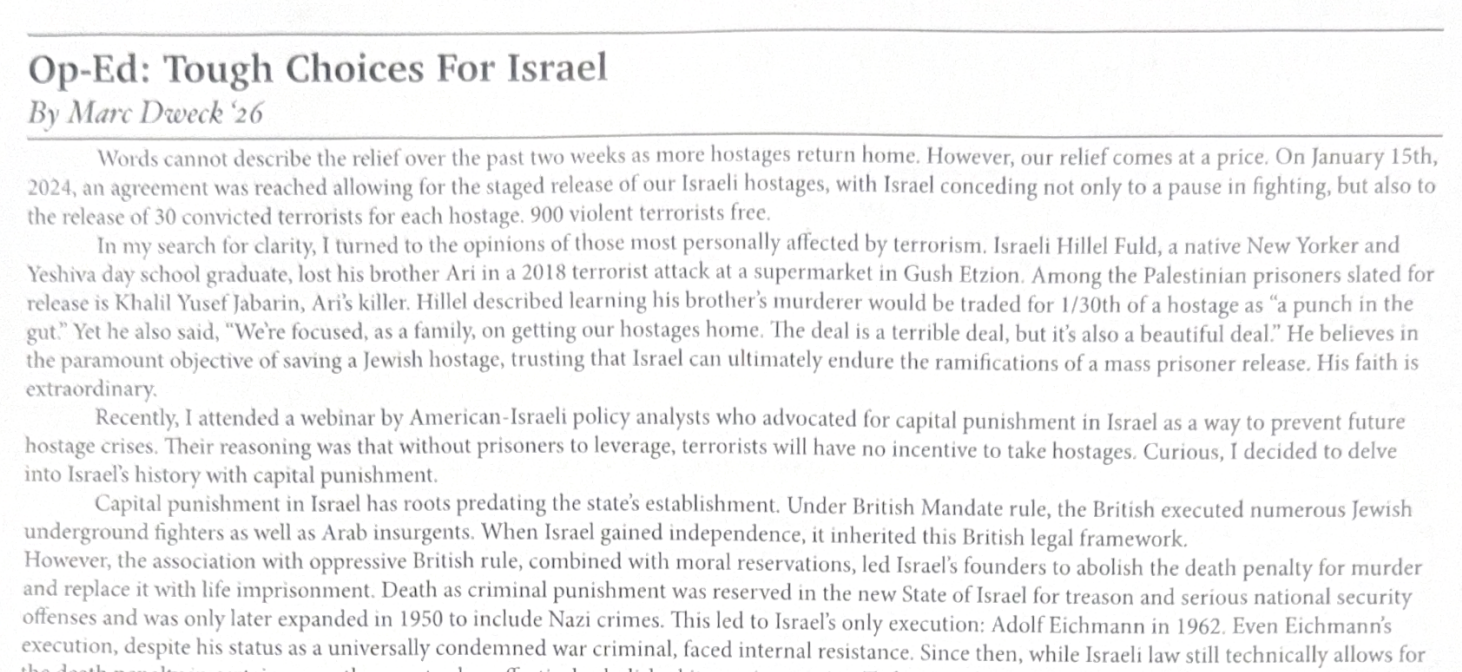
FIRST PRIZE: The Paw Print, Yeshivat Frisch, Tough Choices for Israel
By Marc Douek
JUDGE”S COMMENT: This nicely researched article presents a complicated, timely issue through numerous lenses in a way that is compelling and accessible.
SECOND PRIZE: The Mane Idea, Northwest Yeshiva High School, The Price of Israel’s Hostage Deals
By Elianna Rothstein
JUDGE’S COMMENT: A powerful read that takes an issue ripped from the headlines and makes it intensely personal.
THIRD PRIZE: The Lion’s Tale, Charles E. Smith Jewish Day School, MCPS Should Standardize Holocaust Education
By Eliana Abrams and Maiya Blumenthal
JUDGE’S COMMENT: This piece is nicely focused and uses data and strong quotes to build an argument to a convincing conclusion.
Category 8 – Photojournalism: Photograph attached to any Jewish or israel-related story
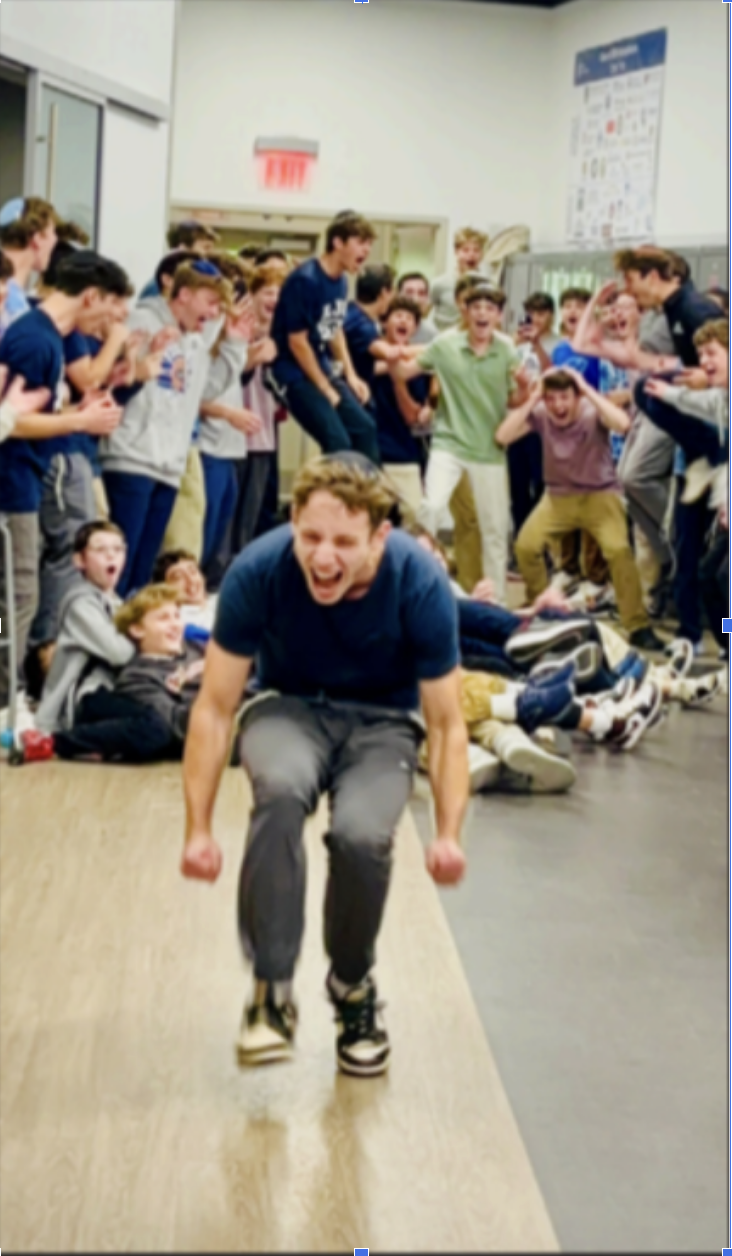
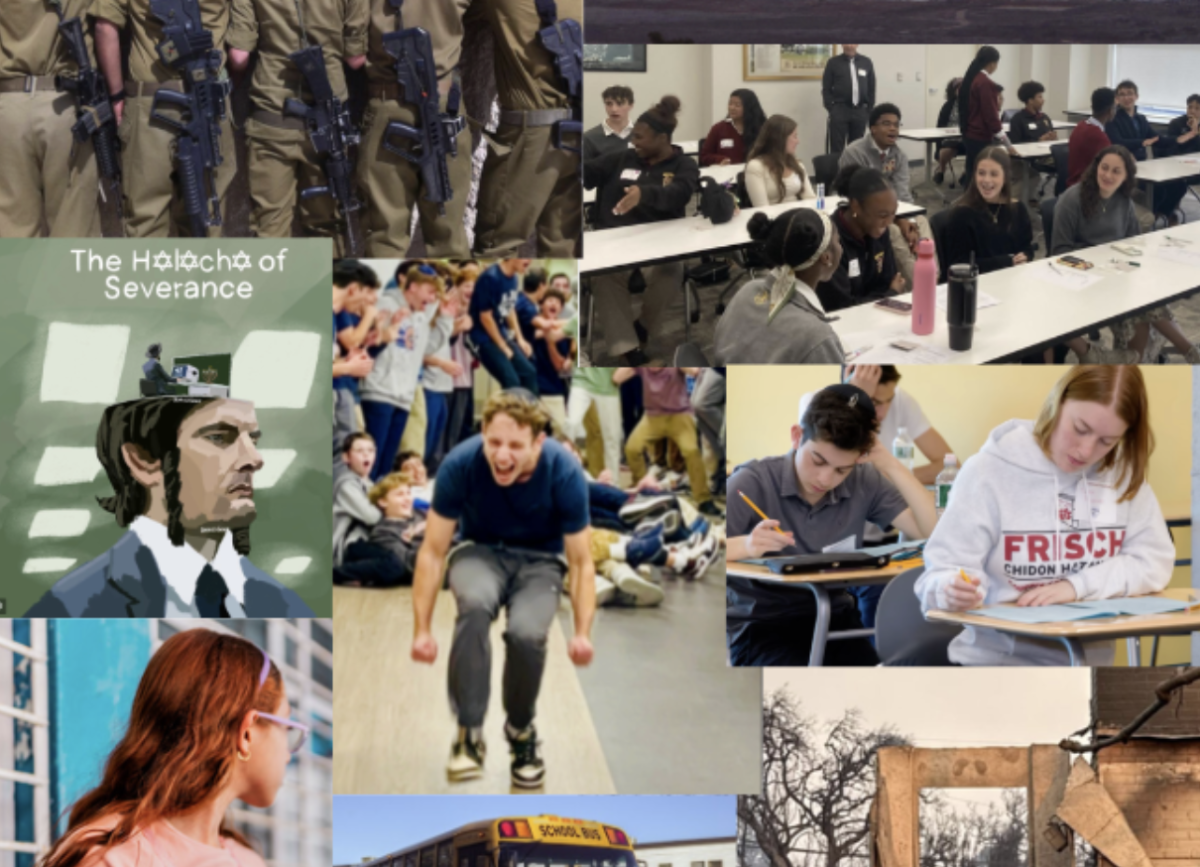
FIRST PRIZE: Palette, Atlanta Jewish Academy, “Senior Liav Cohen brings ruach to the high school during Shabbat dancing”
Photo by Ari Monheit
JUDGE’S COMMENT: The photographer crafted a strong composition with emotion in the foreground and a contributing background to create a dynamic image with depth and foresight.
SECOND PRIZE: Hamodiya, Melvin J. Berman Hebrew Academy, “Soldiers and guests stand together, singing the Israeli National Anthem”
Photo by Amy Hollander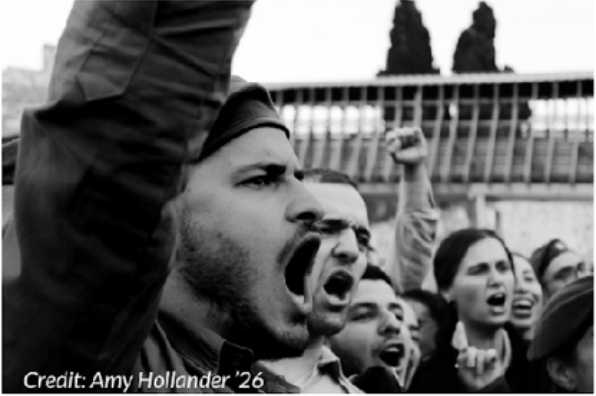
JUDGE’S COMMENT: The photographer captured a moment of peak emotion left of frame, with repetitive faces creating a strong graphic line reinforcing the overall story of the image.
THIRD PRIZE: Hamodiya. Melvin J. Berman Hebrew Academy, “Israeli soldiers line up at graduation ceremony”
Photo by Amy Hollander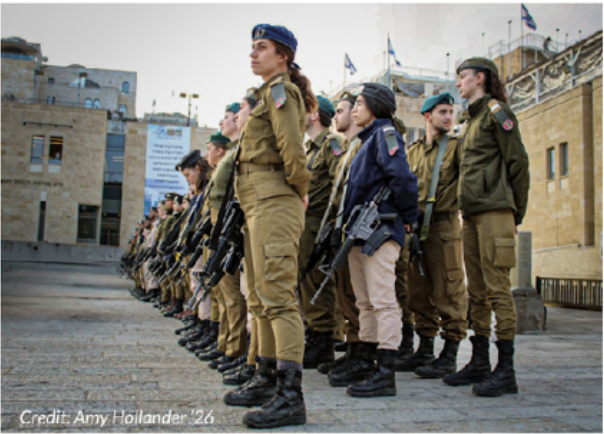
JUDGE’S COMMENT: The photographer utilized leading lines to create a layered image, but also found a small moment of playfulness with one soldier looking the opposite direction.
Category 9 – Layout, design, illustration or infographic attached to any Jewish or Israel-related story
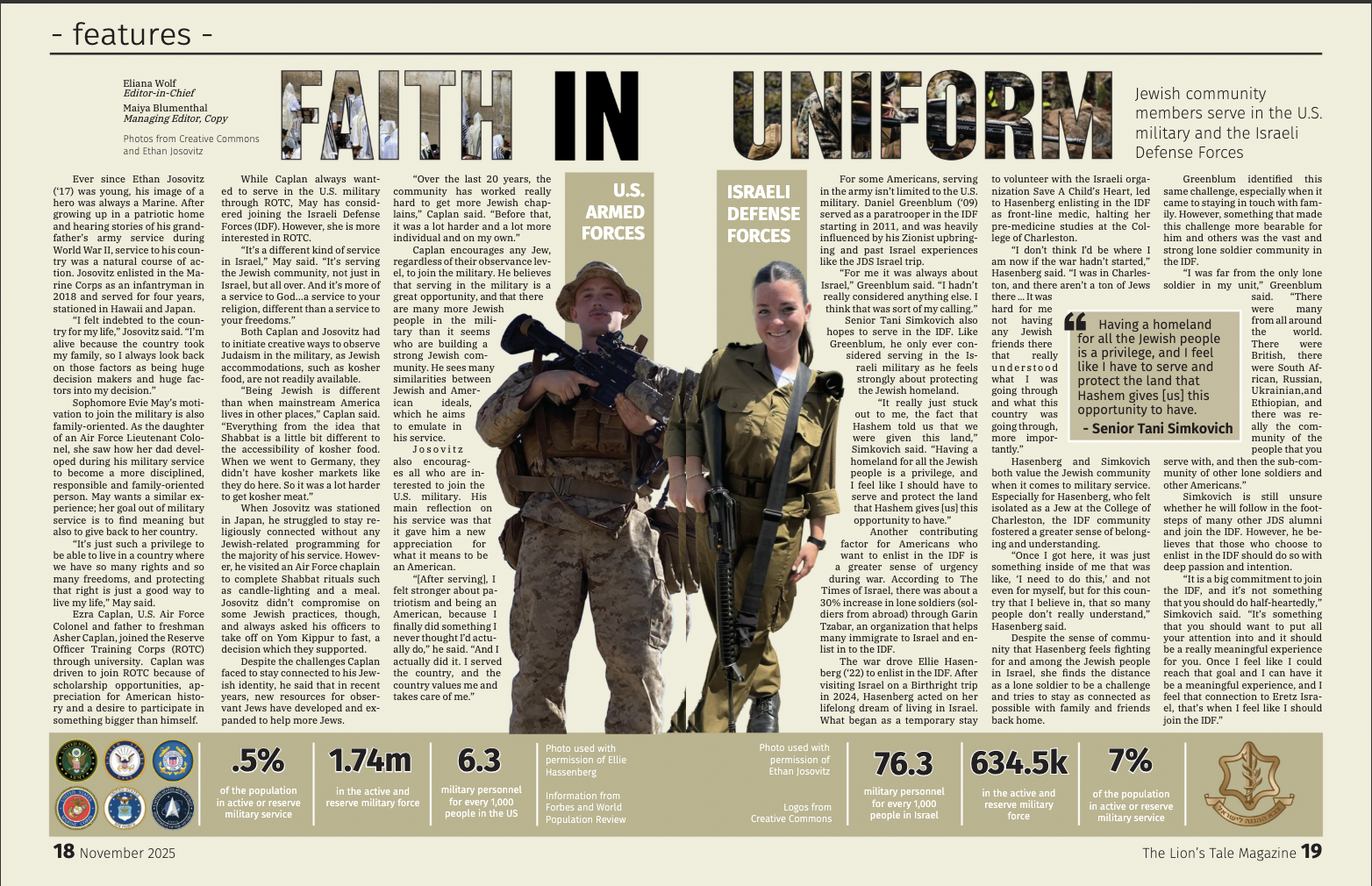
FIRST PRIZE: The Lion’s Tale, Charles E. Smith Jewish Day School, Faith in Uniform
Page design by Anna Polon
JUDGE’S COMMENT: The designer utilized symmetry and text block structure to create a balanced spread with a legible infographic line at the bottom of the pages.
SECOND PRIZE: Hamodiya. Melvin J. Berman Hebrew Academy, “Everything But The Kitchen Ink: Special Spring Edition”
Page design by Adira Branda 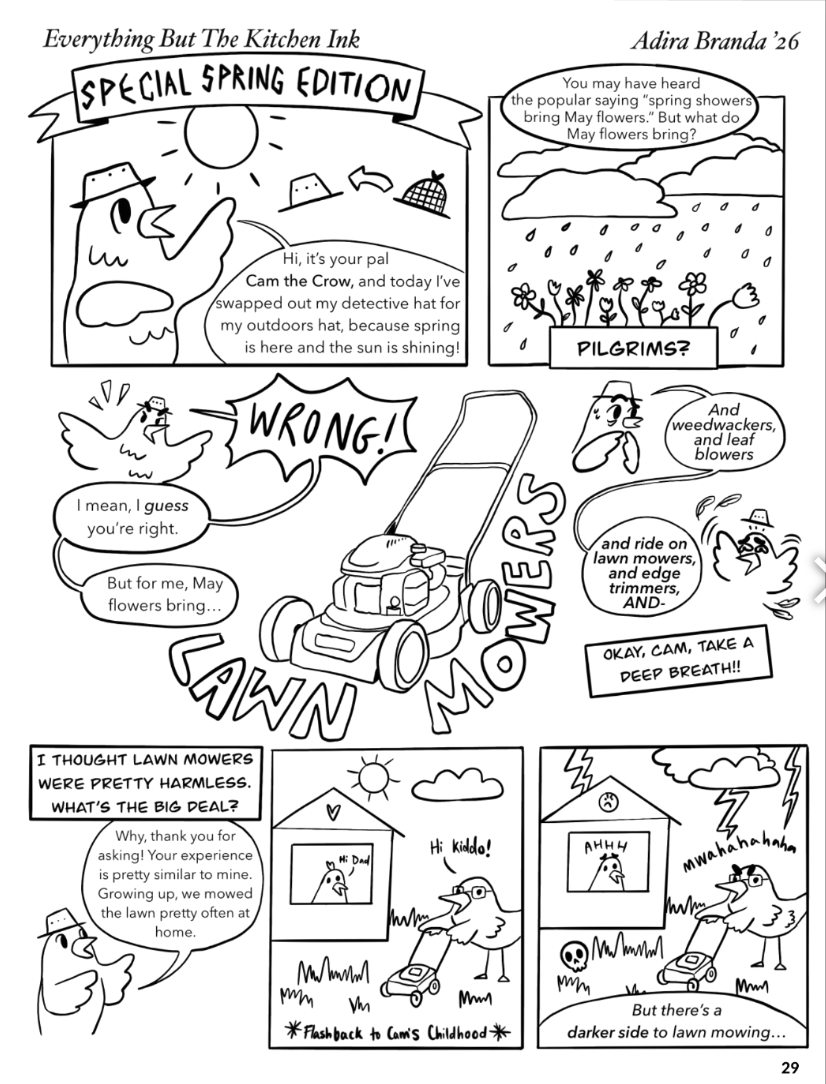
JUDGE’S COMMENT: The designer created a visually striking spread, using comics to create a playful story for the viewer to engage with.
CATEGORY 10: Video or podcast reporting of any Jewish- or Israel-related story
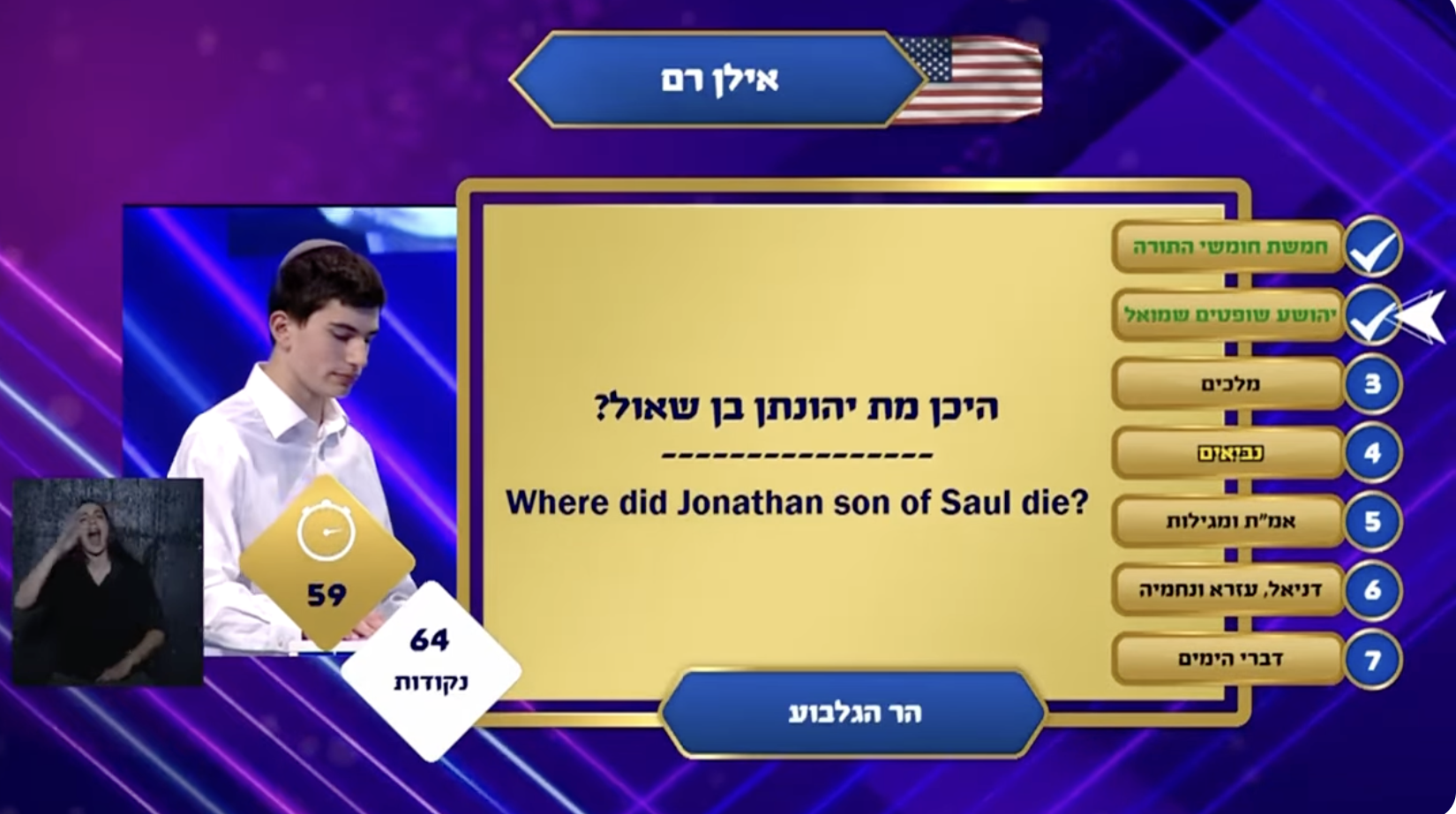
FIRST PRIZE: Frisch News Network (FNN), Yeshivat Frisch, Yomam Valayla: Spotlight on the Frisch Chidon Team
Video by Millie Schwartz, Lali Rimer and Leah Bernstein
JUDGE’S COMMENT: The news team showed dedication and persistence following a storyline from beginning, middle, and end, creating an engaging and informative documentary piece across borders.
SECOND PRIZE: Frisch News Network (FNN), Yeshivat Frisch, Special Report: FNN visits our sports management interns at Fairleigh Dickinson University
Video by Millie Schwartz
JUDGE’S COMMENT: This video demonstrates a well-rounded understanding of technical and storytelling skills, creating a short but powerful news piece expected of modern newsrooms.
THIRD PRIZE: The Lion’s Tale, Charles E. Smith Jewish Day School, CESJDS Marks Hoshanah Rabbah and Hostage Return
Video by Eliana Abrams and Anna Polon
JUDGES’ COMMENT: The filmmakers took the time to gather strong interviews and in-field b-roll, demonstrating a strong understanding of the fundamentals of video journalism.
Category 11: Social Media Reporting. Ongoing use of social media to report stories that include Jewish and/or Israel-related news or features published on an established social media platform or platforms.
No winner
Category 12: Any Jewish- or Israel-related news or feature story by a high school student appearing in a professional (non-school) publication, in print or online.

FIRST PRIZE: Jewish Telegraphic Agency (JTA), How one Washington-area day school saw a surge of recruits in Israel’s military since Oct. 7
By Rimonne Zackheim
JUDGES’ COMMENT: An excellent piece, with strong interviews and good context, including statistics for background that are very enlightening.
SECOND PRIZE: Jewish Telegraphic Agency (JTA), A kosher community fridge in Chicago’s Jewish suburbs arrives amid rising food insecurity
By Orlie Weitzman
JUDGES’ COMMENT: A story that takes us to an unusual and impressive undertaking the brings together memory of the events of Oct. 7 with outreach to those in need today. Strong reporting and good initiative in choice of subject.
THIRD PRIZE: Jewish Telegraphic Agency (JTA), For teens by teens, the ‘Daf Punk’ podcast delivers a daily dose of Talmud
By Maytal Exler-Kaufer
JUDGES’ COMMENT: Great interviews, and strong writing in a piece that uniquely portrays a project by the author’s peer group.
Category 13: Any Jewish- or Israel-related opinion story by a high school student appearing in a professional (non-school) publication, in print or online.
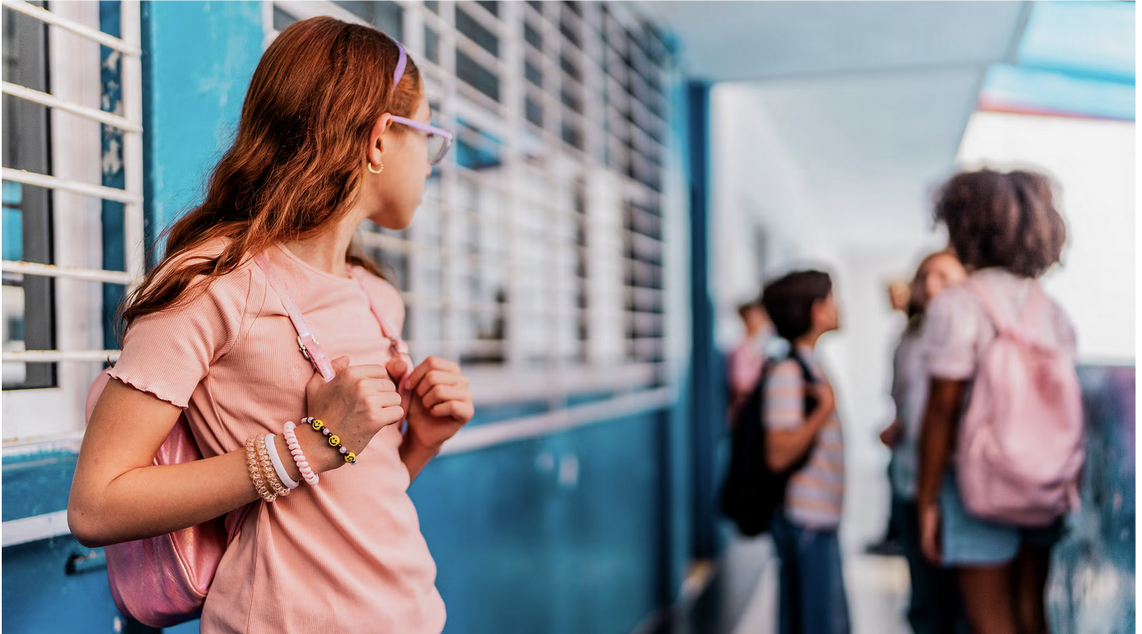
FIRST PRIZE: New York Jewish Week via Jewish Telegraphic Agency, What it’s like being the only Jewish girl at a German school
By Lily Rawls
JUDGE’S COMMENT: An honest portrait of how the writer navigated a difficult experience.
SECOND PRIZE: New York Jewish Week via Jewish Telegraphic Agency, How being a public school student strengthened my Jewish identity
By Renata Firestone
JUDGE’S COMMENT:A mindful reflection on a paradox where the author gracefully takes us to her resolution.
THIRD PRIZE: Jewish Telegraphic Agency, What a liberal Jewish teen learned at a conference of conservatives
By Avery Simon
JUDGE’S COMMENT: An insightful description of an uncomfortable experience.
GRAND PRIZE IN JEWISH SCHOLASTIC JOURNALISM
The Grand Prize is chosen by JSPA’s judges from among the first-place winners they’ve selected in high school publications.
The Panther Post, YULA High Scho0l, Lavatory Legato: A Music Review in the YULA Boy’s Restrooms, by Raphael Shrier
JUDGES’ COMMENT: Some of the best feature stories are hiding in plain view. This lively, fun piece on music in the school men’s room is one of those — surprising in its subject while also extremely well-written and composed.