NYHS students claim to feel overwhelmed by their schoolwork this year.
A survey of 16 NYHS students conveys that their school-related stress stems from their workload. Half of those surveyed claimed schoolwork negatively affected their mental health, specifically homework.
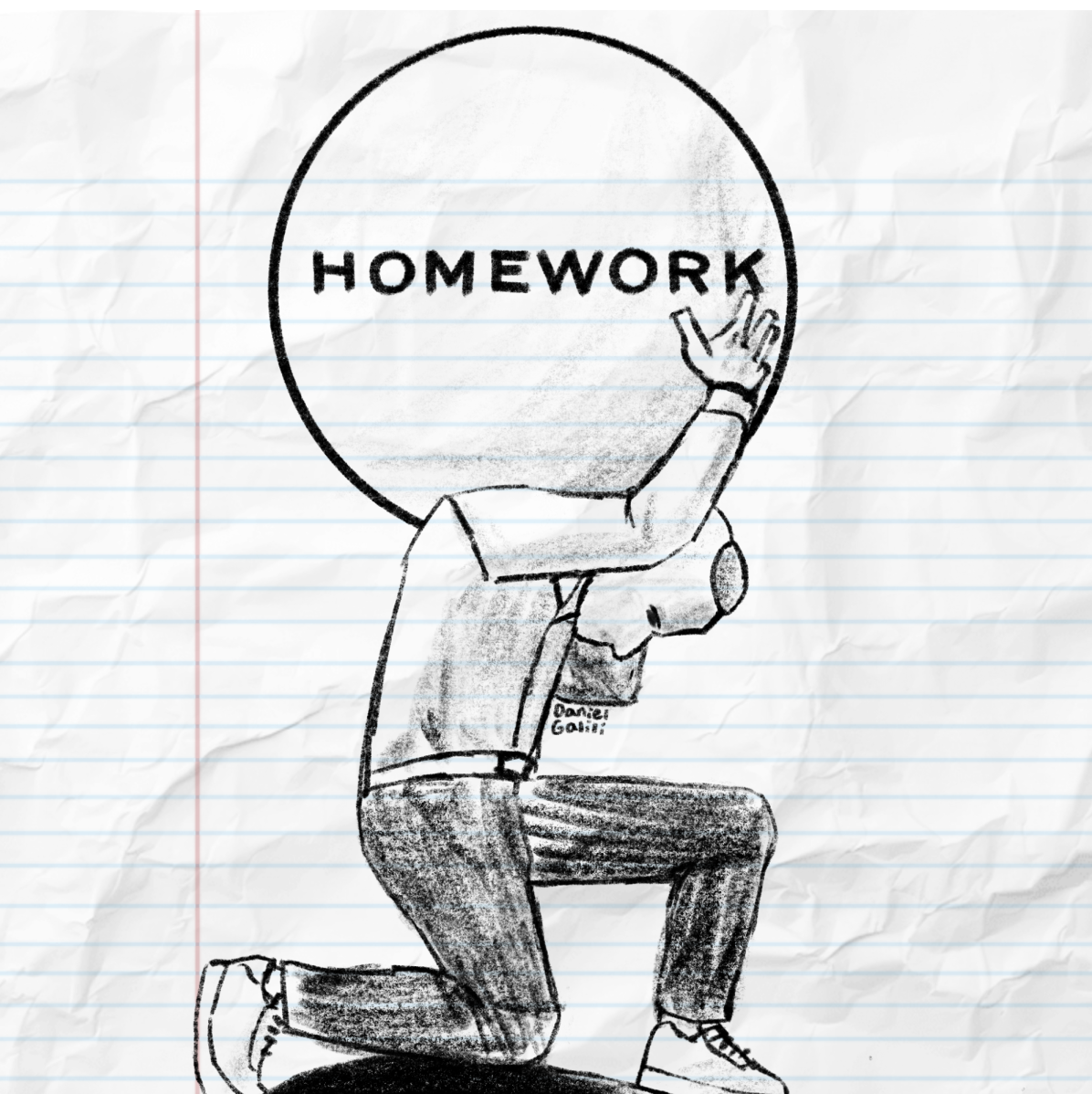
“The amount of homework I get is insane,” described one anonymous student. “I almost never have time for anything else.”
Other areas of stress included added commitments like sports and lack of sleep. When rating their mental health on a scale of one to ten (one being very bad and ten being very good), 81.4% of students rated their mental health five and above. 18.8% of students rated their mental health below five.
NYHS junior Judy Aaronson claims she gets “3 to 4 hours of homework a night.” One anonymous eleventh grader even referred to their homework as “a crushing weight.”
The “dual curriculum with more classes and responsibilities [from those classes]… contributes to student stress,” school psychologist Sivan Komatsu says.
According to Komatsu, social media and the rise in antisemitism are other big factors contributing to poor mental health in students. However, she notes there are protective factors at NYHS such as a tight-knit community and strong religious identity.
“[The protective factors are] more pronounced here than in other schools that I’ve been in because of the nature of our school,” she says. “Many of our students have such a strong sense of Jewish identity, because religion and spirituality are important to many of them, that’s a protective factor.”
She adds that because of the school’s smaller size, she is able to offer more mental health support as needed than she would in a larger school. Dr. Marianne Ide, NYHS history teacher, agrees.
“We really are a team,” she said. “If I see somebody that is clearly not doing well, I have ten people I can ask if they’re seeing the same thing.”
To offer support, Komatsu works with teachers to ensure they are able to notice warning signs that a student may be experiencing mental struggles.
“Big changes are what we look out for,” she said.
Examples of big changes include a student being more tired or restless, irritable, or more emotional than usual. She notes that these are mostly spotted by teachers, and they alert her with any concerns they have about a student.
In addition to advising teachers, Komatsu leads the school’s newly structured advisory program, which happens once a week. Advisers do one-on-one check-ins with their advisees about how their academics are going and offer support to solve any academic struggles their advisees have. Each adviser has about six students so they can give more individual attention to each one.
In the future, Komatsu hopes to incorporate a structured curriculum with skill-building that advisors can do with their students. She plans for the students to learn executive functioning and social-emotional skills.
“Things like that are life skills that can be helpful across classes, but also beyond high school,” she said.
While Komatsu and teachers work to preserve student mental health, the students’ previous grievance still stands.
“If we had a lighter workload, I think students’ mental health would be better,” said Aaronson.
This story was published in the Mane Idea on Jan. 6, 2026.