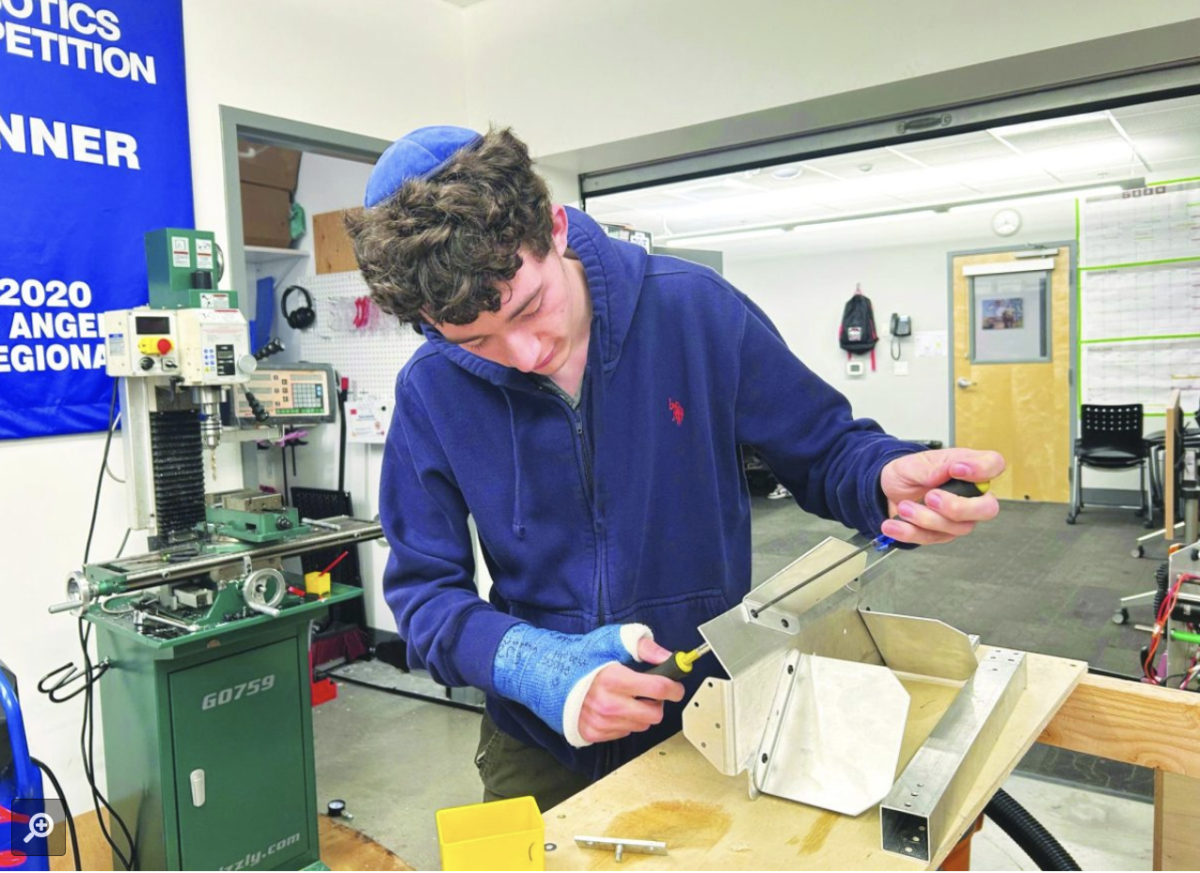
In a recent survey of the YULA student body with 112 responses, only 20.5% of students said that they believe that they consistently get enough sleep on school nights. Another 77.6% said they always or often feel tired during school.
“I always seem to be tired,” said Mindy Hirschel (‘28).
Even the percentage of the student body who believe they are getting enough sleep may not be meeting medical recommendations. 64.3% of responders said they typically sleep 5-7 hours on school nights, but the American Academy of Sleep Medicine (AASM) advises that teenagers sleep 8-10 hours for healthy functioning.
Some students may even require more than that.
“It’s actually very genetic,” said Dr. Laurel Schramm, Los Angeles pediatrician. “It varies a lot from person to person. I’ve seen kids in the same family, even fraternal twins, need as many as 2 hours of sleep different from each other in order to feel good. So it’s frustrating to me that in a lot of very college-focused, academic high schools, the kids have a full day, and then extracurriculars, and then so much homework, and the kids that genetically need more sleep are just suffering.”
The connection between sleep and academic performance was addressed by both Dr. Schramm and the student body. 46.4% of students said that homework and studying most often keeps them up late, from a list of multiple choice options including social media, hanging out with friends, and sports.
According to Dr. Schramm, sleep deprivation can have major effects on concentration, memory, and learning in high school students.
“[When you’re tired], you have less emotional reserve,” she said. “So I think it’s really affecting a lot of teenagers, causing more anxiety, causing more depression…you have less resilience when you don’t get enough sleep to deal with that. And we know that it causes problems with focusing and attention.”
Another common factor of sleep problems in teens is screen time. Approximately a third of responders said that their phone, social media, or watching shows most often keeps them up late. Mindy Hirschel (’28) said that spending less time on her phone would provide the greatest improvement to her sleep. Samantha Mendelsohn (’26) said that being more conscious about stopping screen time before sleep would create the biggest change in her sleep habits.
Sleep loss is also linked to poor mental health in adolescents.
“If you don’t get enough sleep, that’s going to adversely affect your mental health,” said Dr. Schramm. “And then of course the other way around, if you’re feeling stressed, then people often have worse sleep.”
Dr. Schramm said many teenagers misunderstand what “enough sleep” really means.
“I think the biggest misconception is that everybody needs the same amount of sleep,” she said. “And that if they’re able to get up in the morning and function during the day, then they got enough sleep.”
This story was published in The Panther Post of YULA High School on March 18, 2026.